Pool Resurfacing — Houston, TX
Pool Replastering & Resurfacing
A pool surface doesn't fail all at once — it fades, roughens, and stains for months before anyone picks up the phone. Replastering strips the surface back to the shell and rebuilds it, giving you a smooth, watertight finish again. Whether you're patching stains before they spread or starting fresh with a premium Pebble finish, the right call depends on your pool's age, condition, and how hard you use it.
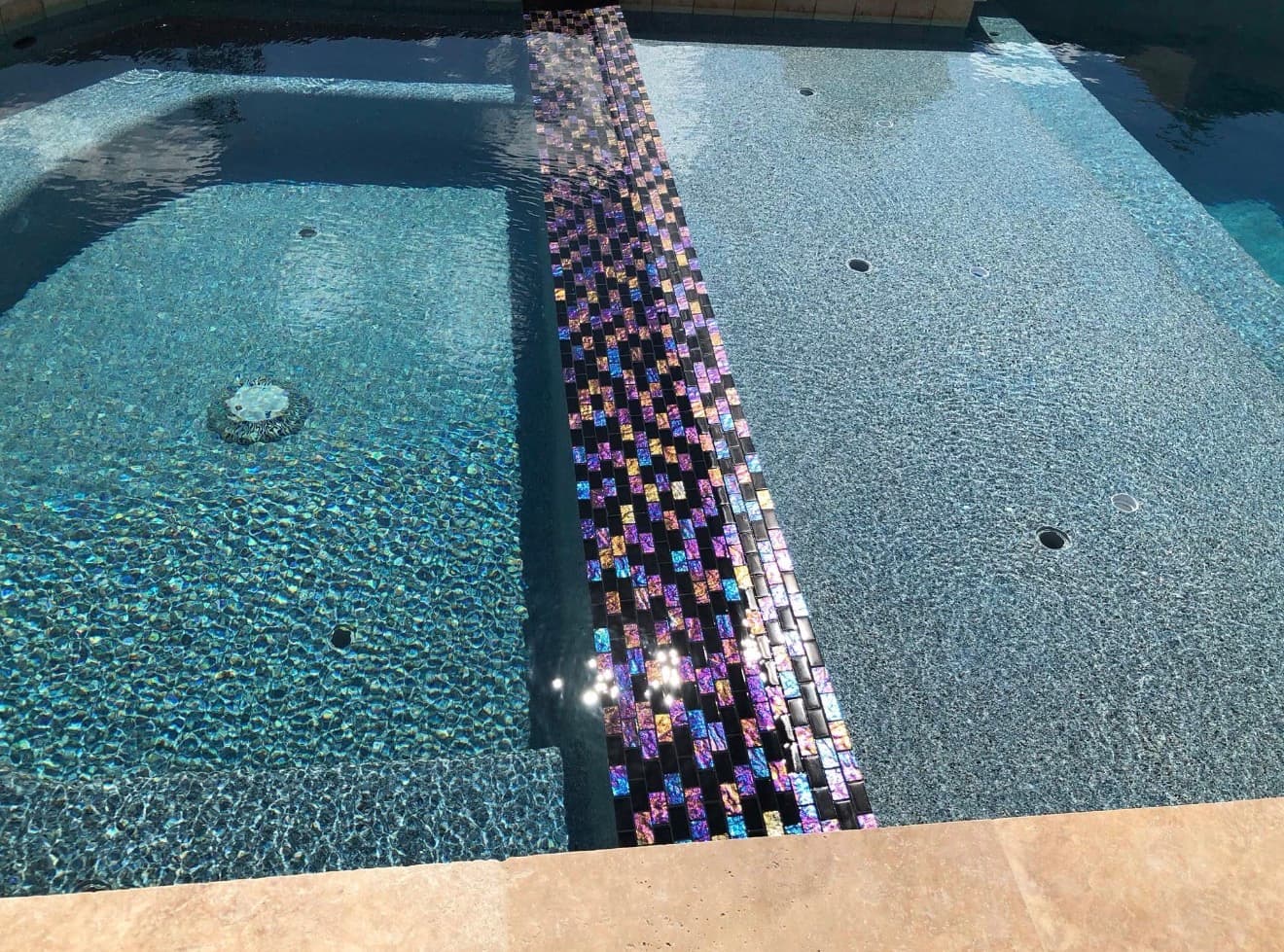
When Does a Pool Need Replastering?
A few signs tend to show up together: rust-colored or dark blotchy staining that scrubbing won't remove, a surface that feels rough or sandpaper-like underfoot instead of smooth, or a chalky white residue that rubs off on swimsuits and skin — that's plaster dust, a sign the finish is breaking down at the surface level. Visible pitting, small pockmarks, or fine surface crazing (thin spiderweb cracking in the finish itself, not the shell) round out the usual list.
Houston's climate speeds all of this up. Hard, mineral-heavy fill water accelerates chalking and scale buildup compared to softer water elsewhere. Intense summer heat and constant UV exposure fade and dry out a finish faster than a milder climate would. And storm season debris — oak leaves, pine needles, silt runoff — etches and stains a surface more if it sits in the water too long after a big storm rolls through.
How Replastering Works
The pool is drained, and the old surface is chipped out down to the gunite or shotcrete shell underneath. Because Houston sits on clay soil with a high water table in many areas, an empty shell needs to be handled carefully — hydrostatic pressure from groundwater can push against an empty pool, which is one reason draining a pool isn't a DIY job. Any minor imperfections in the shell get patched, and plumbing fittings and light niches are checked before the new surface goes on.
A bond coat goes down first, then the chosen finish — plaster, quartz, or Pebble — is troweled on at the correct thickness. Pebble finishes get an additional acid-wash or exposure step afterward to reveal the stone texture underneath the surface cement layer. Once the finish is applied, the pool is refilled immediately; plaster needs to start curing in water within hours to avoid shrinkage cracking, and the first few weeks of brushing and startup chemistry matter almost as much as the application itself.
A typical replastering or resurfacing project takes about 3–5 business days from drain to refill, depending on surface condition, size, and material.
Choosing a Finish
Each option trades upfront cost against how long it lasts — there's no universally “best” choice, just the right fit for your budget and how long you plan to keep the pool.
White Plaster
The classic, most affordable option. Smooth and bright when new, typically lasting 7–12 years before it needs redoing. Best for pools in good structural condition looking for a clean, budget-conscious refresh.
Quartz Aggregate
Adds durability and color retention above standard plaster. Quartz is harder and holds its color longer under Houston's sun and heavy pool use than plain plaster does.
Pebble Finish
The premium option — natural pebble aggregate that can last 20–30 years, textured and slip-resistant. Higher upfront cost, but often the lowest cost-per-year over the life of the surface.
Prices vary by pool size and condition. A free on-site estimate gets you an exact quote.
What Drives Cost
Pool surface area and shape, current surface condition (a badly delaminating plaster job takes more labor to chip out), the finish you choose, and anything we find once the pool is drained — a popped tile, corroded light niche, or minor shell patching — all factor into the final number. Site access matters too; a pool tucked behind a narrow side yard takes longer to service. We won't quote a price without seeing the pool.
Houston Considerations
Hard, mineral-heavy fill water and long, hot summers put extra stress on a new finish through its first curing weeks. Clay soil movement across much of the Houston area can also stress tile lines and coping over time — a big reason homeowners often pair a replaster job with a tile and coping refresh rather than treating them as separate projects.
Explore Related Services
Recent Work
Recent Work
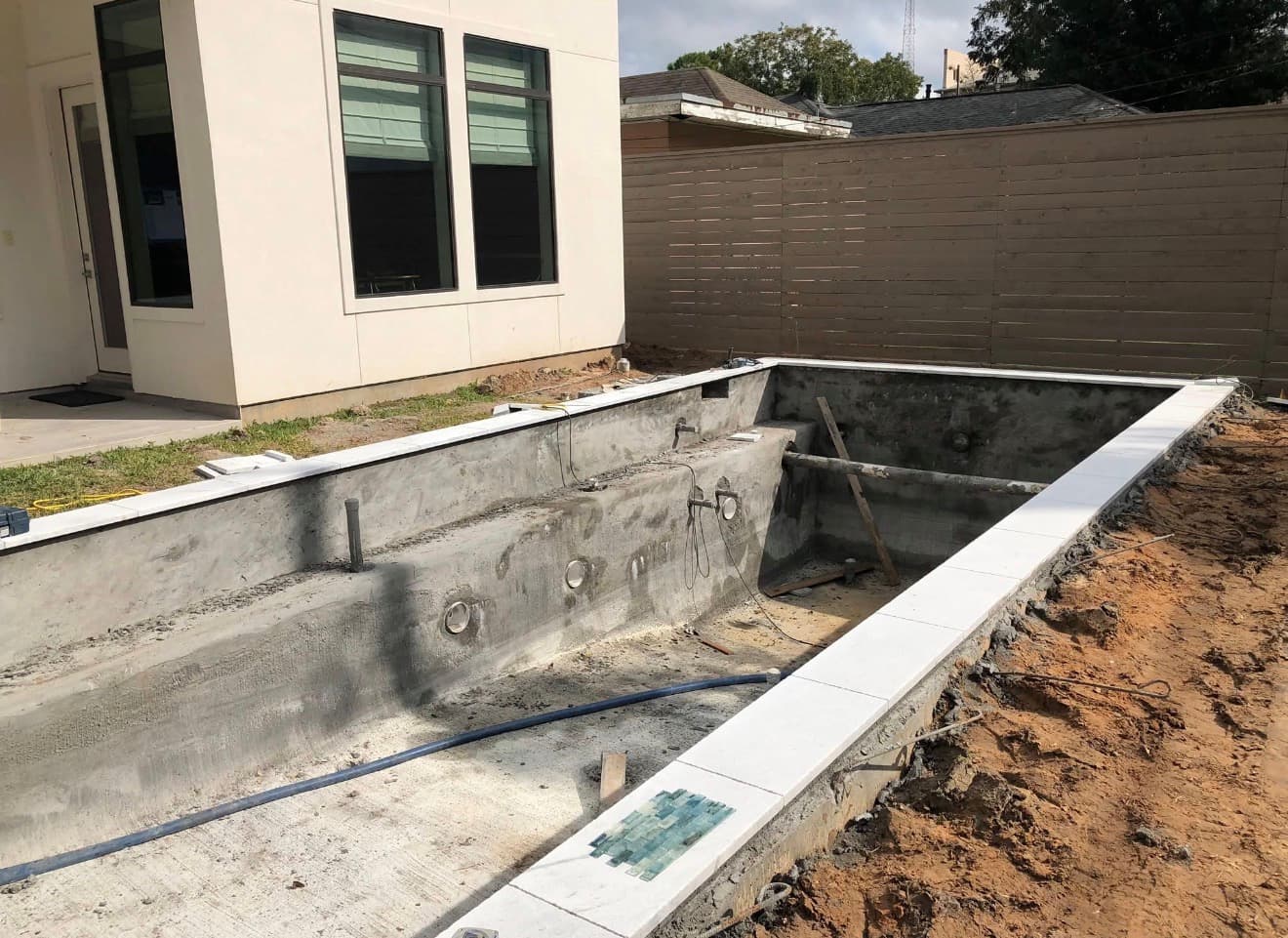
Shell preparation and tile work in progress
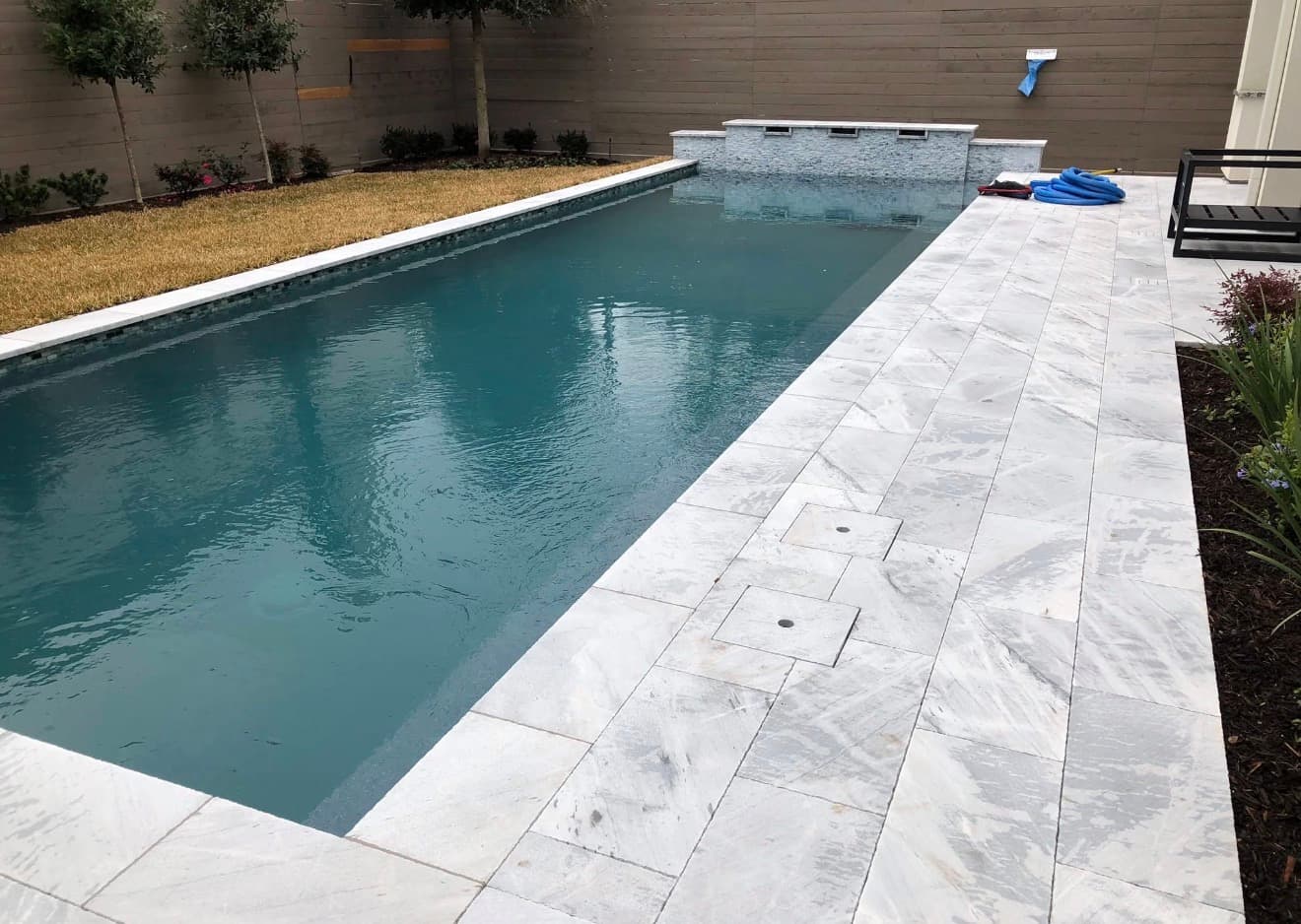
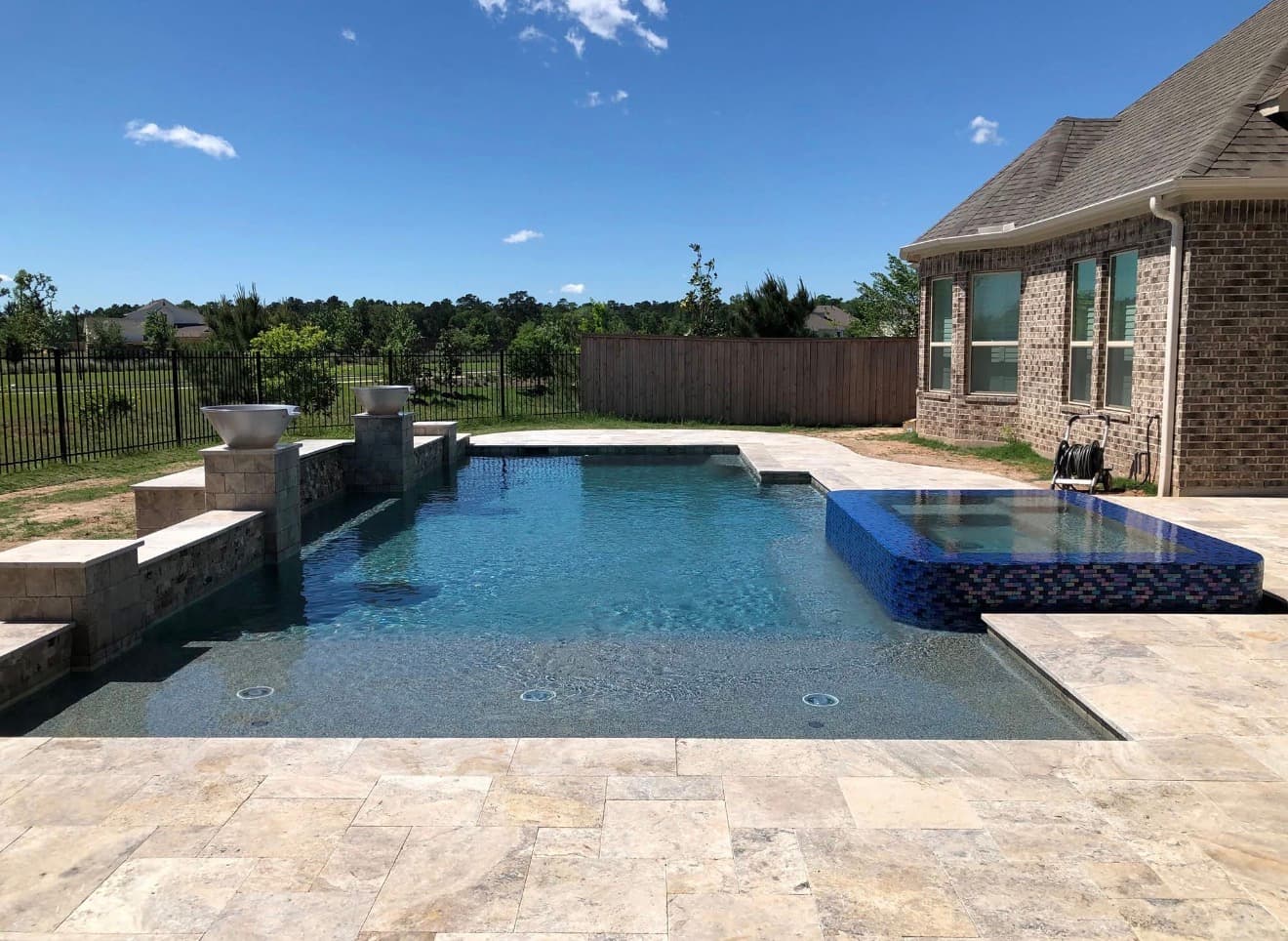
Marble travertine deck, glass tile waterline, raised fountain feature
Common Questions
Replastering FAQ
How do I know if my pool needs replastering or just a deep clean?
If stains wipe away easily with a brush and acid wash, that's usually a maintenance issue, not a resurfacing one. If the surface itself is rough, pitted, or stains keep coming back right after a fresh clean, that's the plaster wearing thin — cleaning won't fix it, a new surface will.
Will I be without my pool the whole time?
The pool sits empty for the resurfacing work itself, which typically runs 3–5 business days depending on surface condition and material. It refills right after the new finish goes on, so you're back in the water shortly after, once the water balances and the initial cure period passes.
Does replastering fix cracks or leaks?
A new surface covers cosmetic surface crazing, but it doesn't repair a structural shell crack or a plumbing leak underneath. If we find a bigger issue once the pool is drained, we'll tell you before moving forward rather than plastering over a problem that comes right back.
What's the difference between plaster, quartz, and Pebble finishes?
Standard white plaster is the most affordable option and typically lasts 7–12 years. Quartz aggregate adds durability and color retention above plaster. Pebble finishes cost more upfront but can last 20–30 years and hold up best to heavy pool use — see our Pebble Tec page for the full comparison.
Does Houston weather affect the timing of a replaster job?
Extreme summer heat means the new plaster needs a disciplined brushing and fill schedule so it cures evenly instead of dusting. Storm season debris can also stress a bare, drained shell if a job gets delayed mid-project, so we plan around the forecast rather than a fixed calendar date.
Ready to Restore Your Pool?
We provide a free on-site estimate and an honest recommendation on the right surface for your pool.